
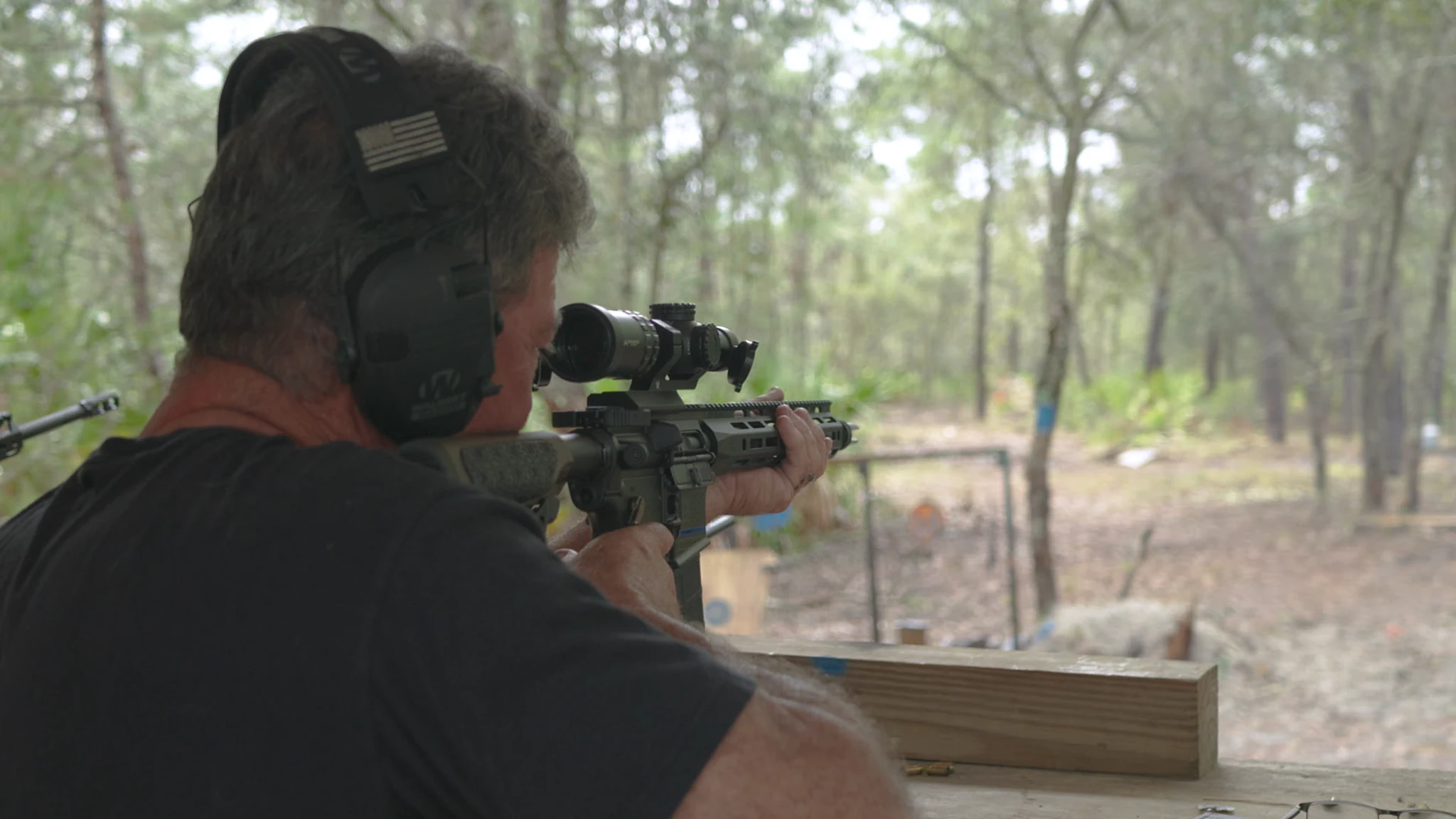
Short day-in-the-life documentary of a true-blue Floridian: This Guy Called Toby.
The film predates Studio Portrait, but became an important step in Alexander Schleich’s documentary practice and in the working partnership with Joselien Vasallo.
01Pre-Production
A second chance, planned properly.
After Under The Big Top, Alexander wanted another documentary to prove the previous lessons had changed the way he worked. A short audio crash course had addressed one of the clearest weaknesses from the previous film. The next film needed stronger preparation behind the camera and a story that could hold together in the edit.
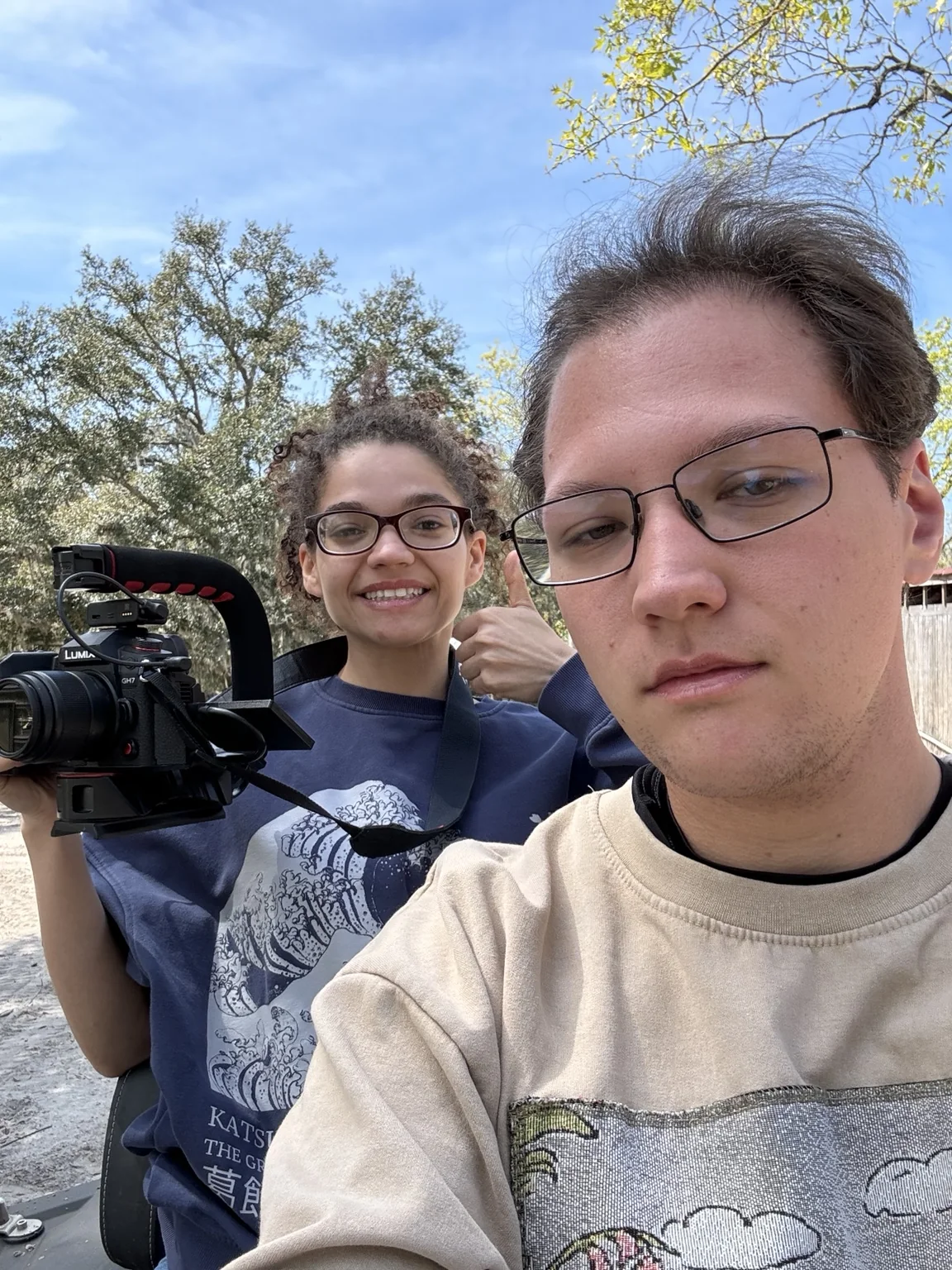
Then someone in the room said, “I know some guy called Toby who lives in Bardin, Florida, on a homestead.” The idea was simple enough to be intriguing. Alexander decided to spearhead it and began looking for a teammate. Joselien Vasallo jumped in out of equal parts peer excitement and curiosity: Bardin offered the chance to step into a way of life completely different from their own and spend several days inside Toby’s world. That decision became the beginning of a working partnership that would later continue inside Studio Portrait, where Joselien became COO & Creative Director.
Access begins with trust.
Toby was suspicious when the first text arrived. A film crew asking to document your life is not an ordinary request. But suspicion eventually gave way to southern hospitality, and once the crew was welcomed onto the property, the homestead became the world of the film.
02Production
A world already full of detail.
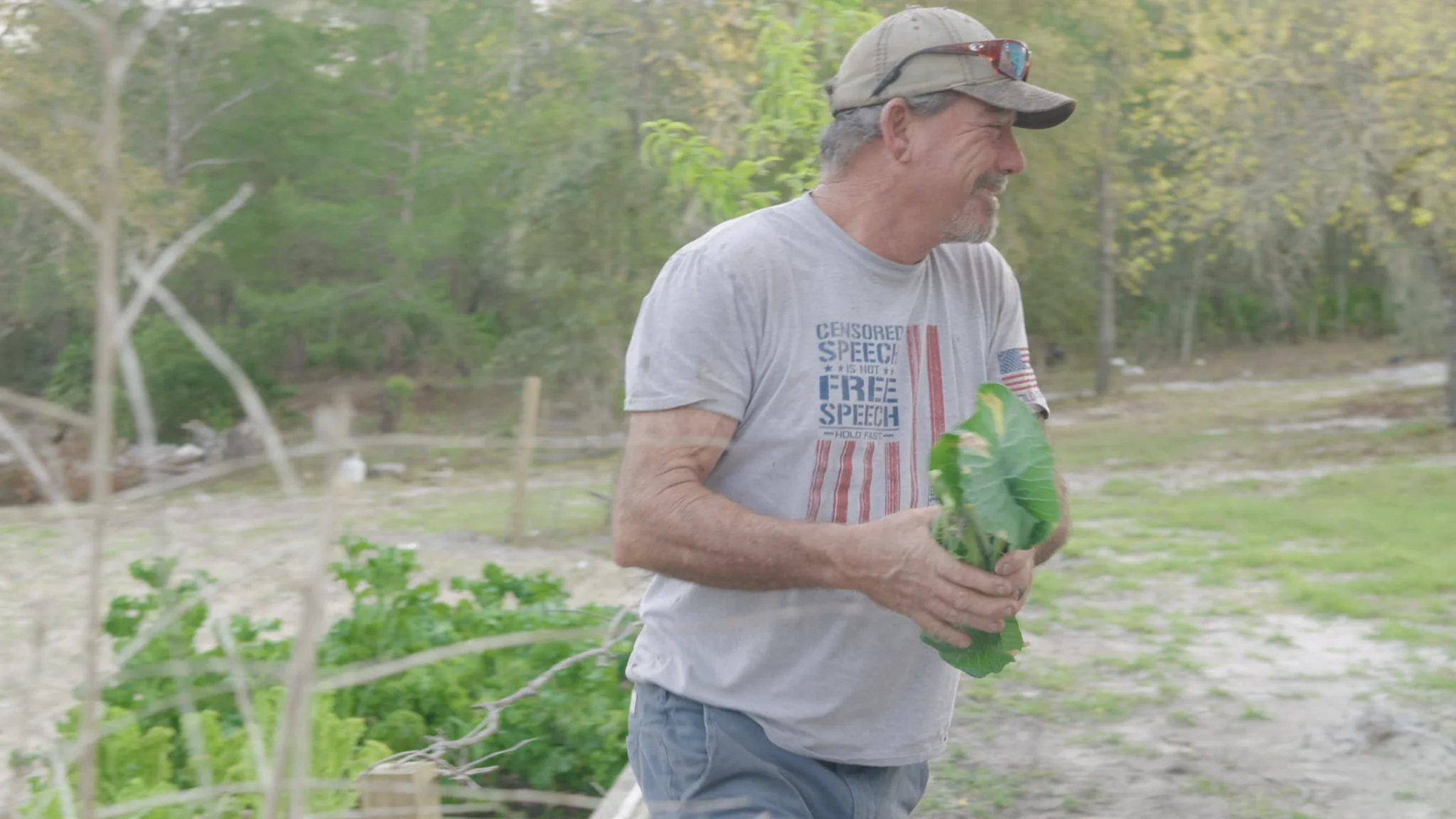
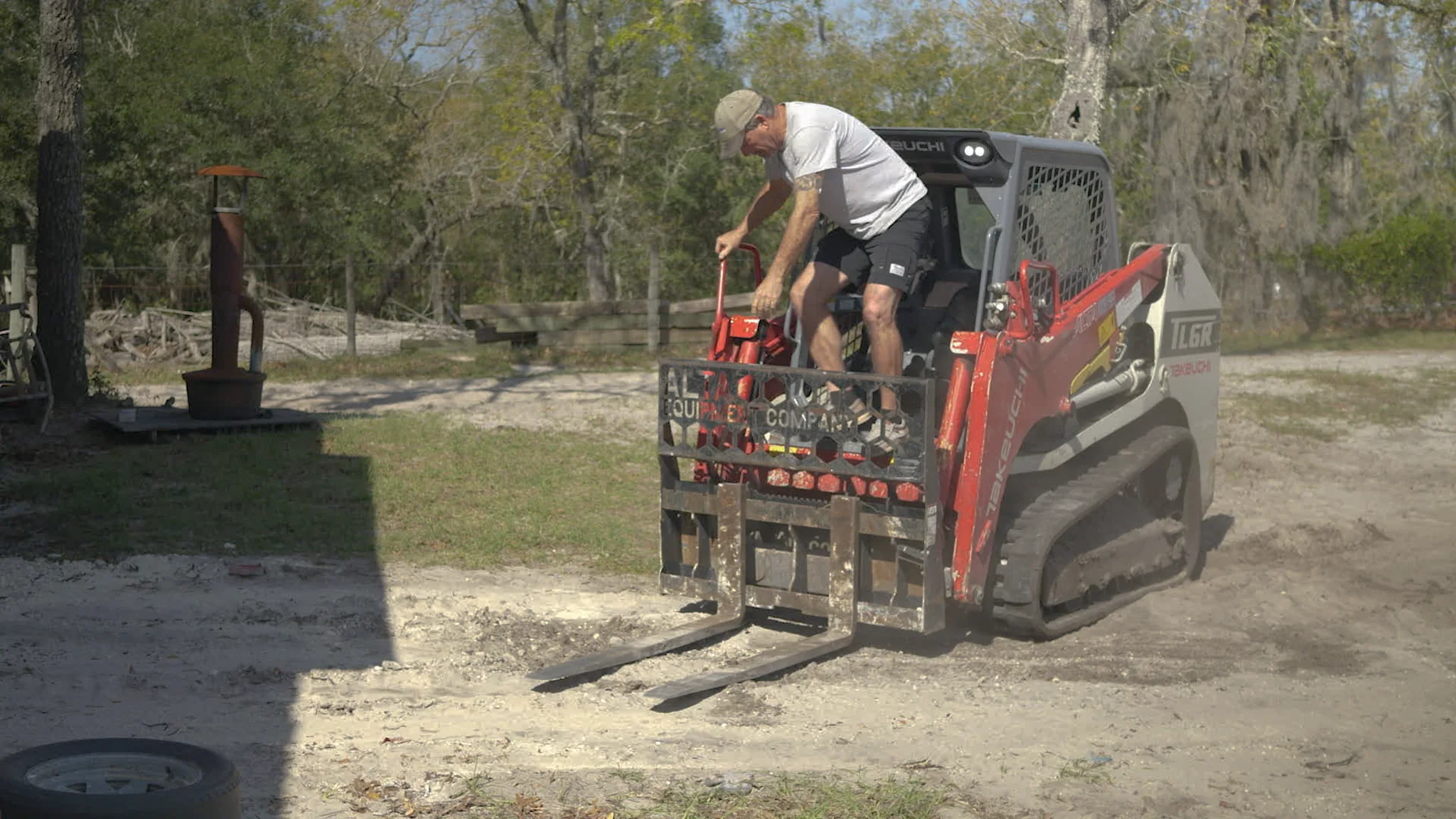
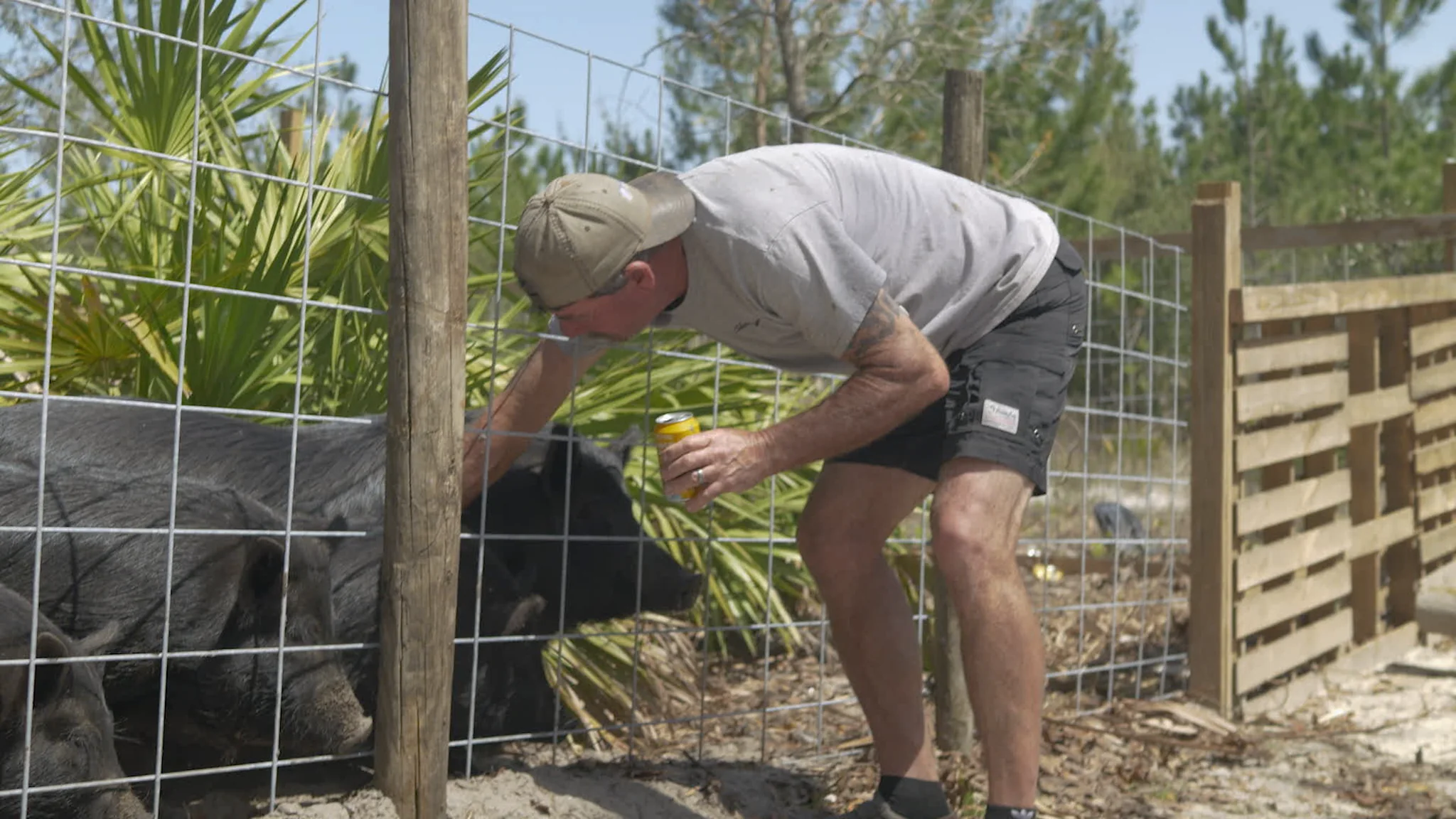
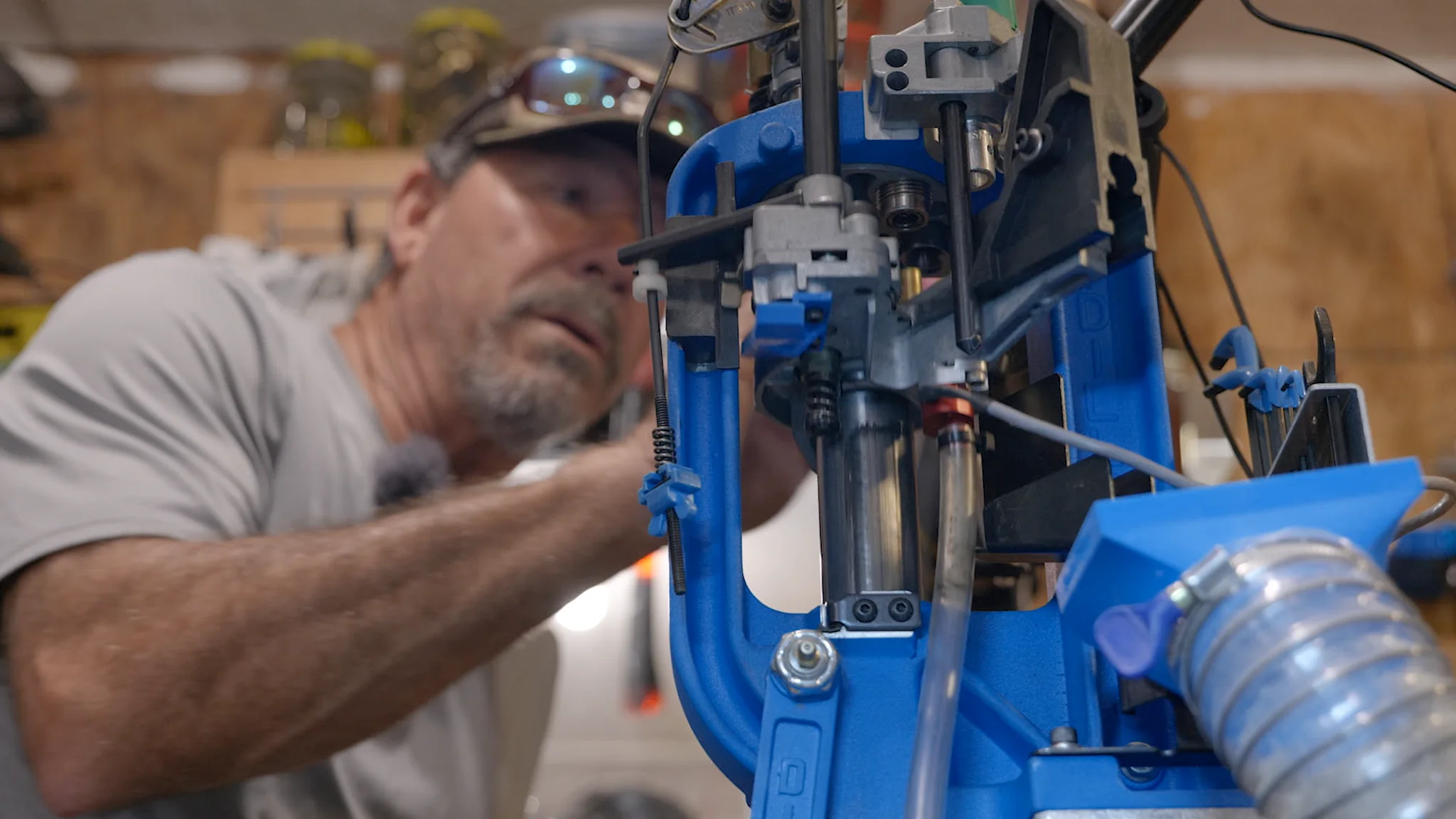
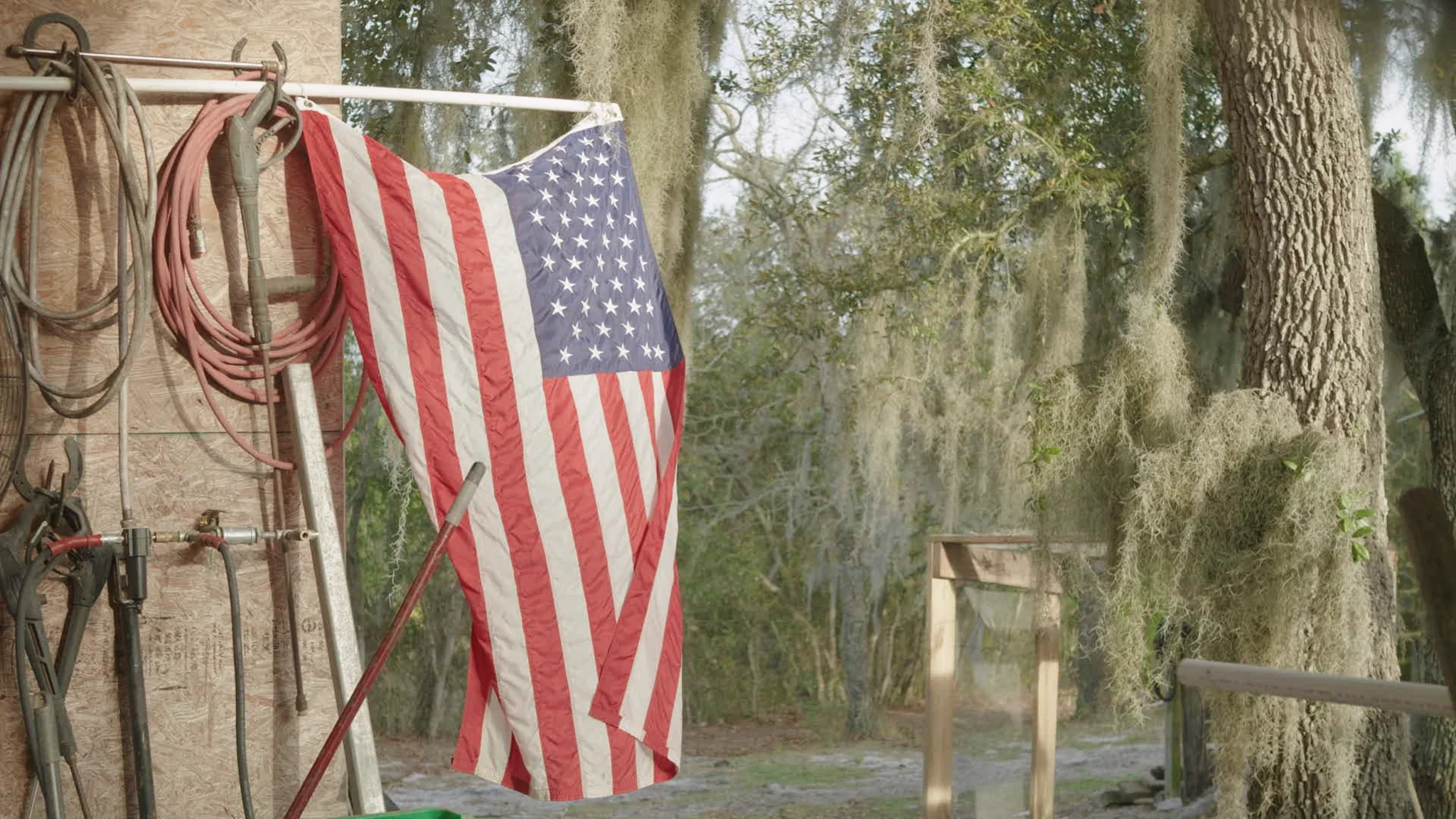
Production took place on February 22 and March 9, 22, 23, and 30, 2025. Toby’s homestead was visually dense: plants, tools, machines, animals, and objects seemed to fill every corner. Rather than erase that environment with an aggressively shallow image, the cinematography kept enough depth for Toby to remain surrounded by the place that defined him.
Alexander generally worked around f/3.5 on Micro Four Thirds, preserving the exposure of f/3.5 while yielding depth of field that reads closer to roughly f/7 on full frame. The choice allowed Toby to remain central while keeping the surrounding homestead alive in the frame — a more immersive portrait through context.
The environment was not background. It was part of the portrait.
Preparation created room to observe.
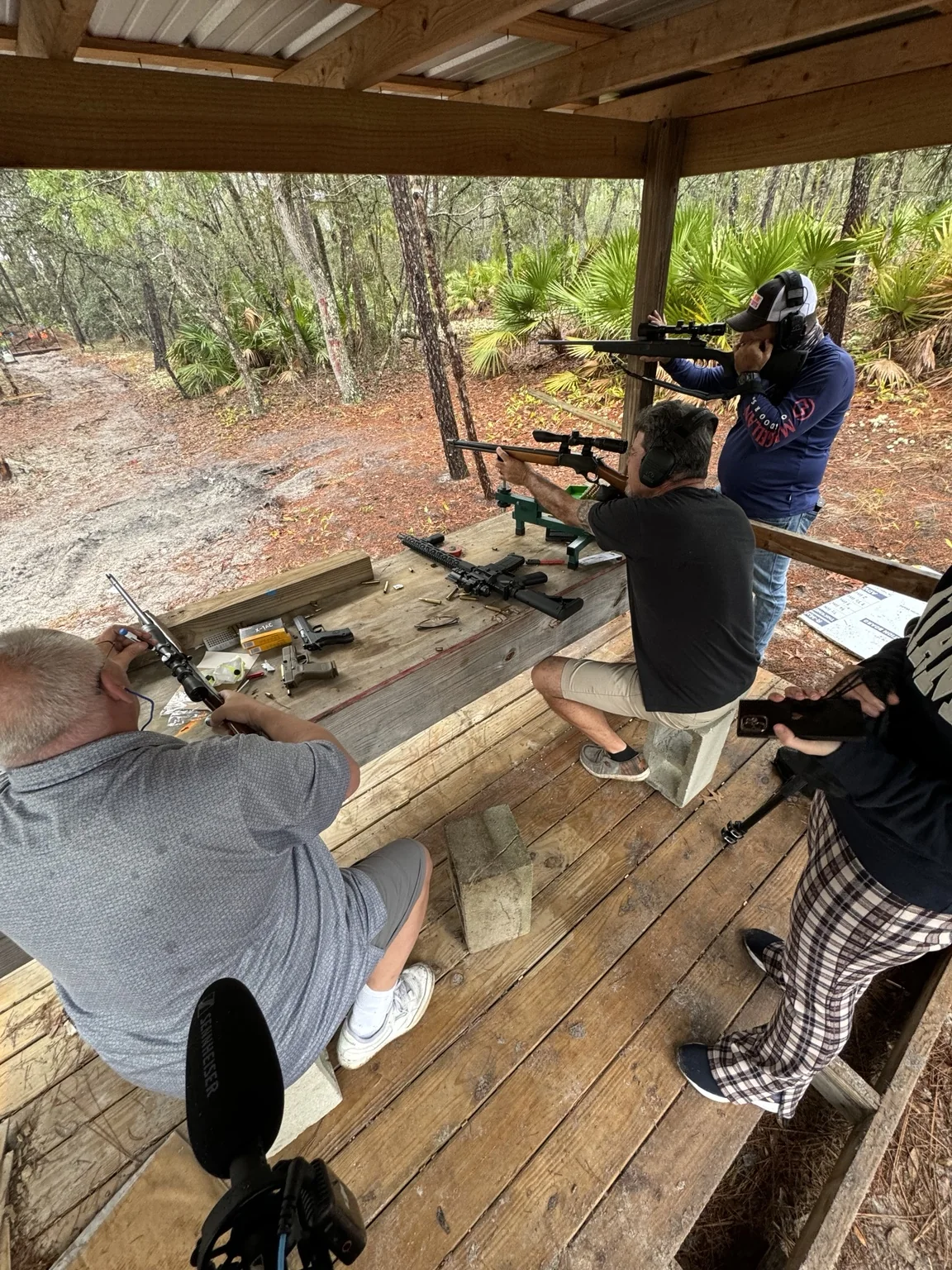
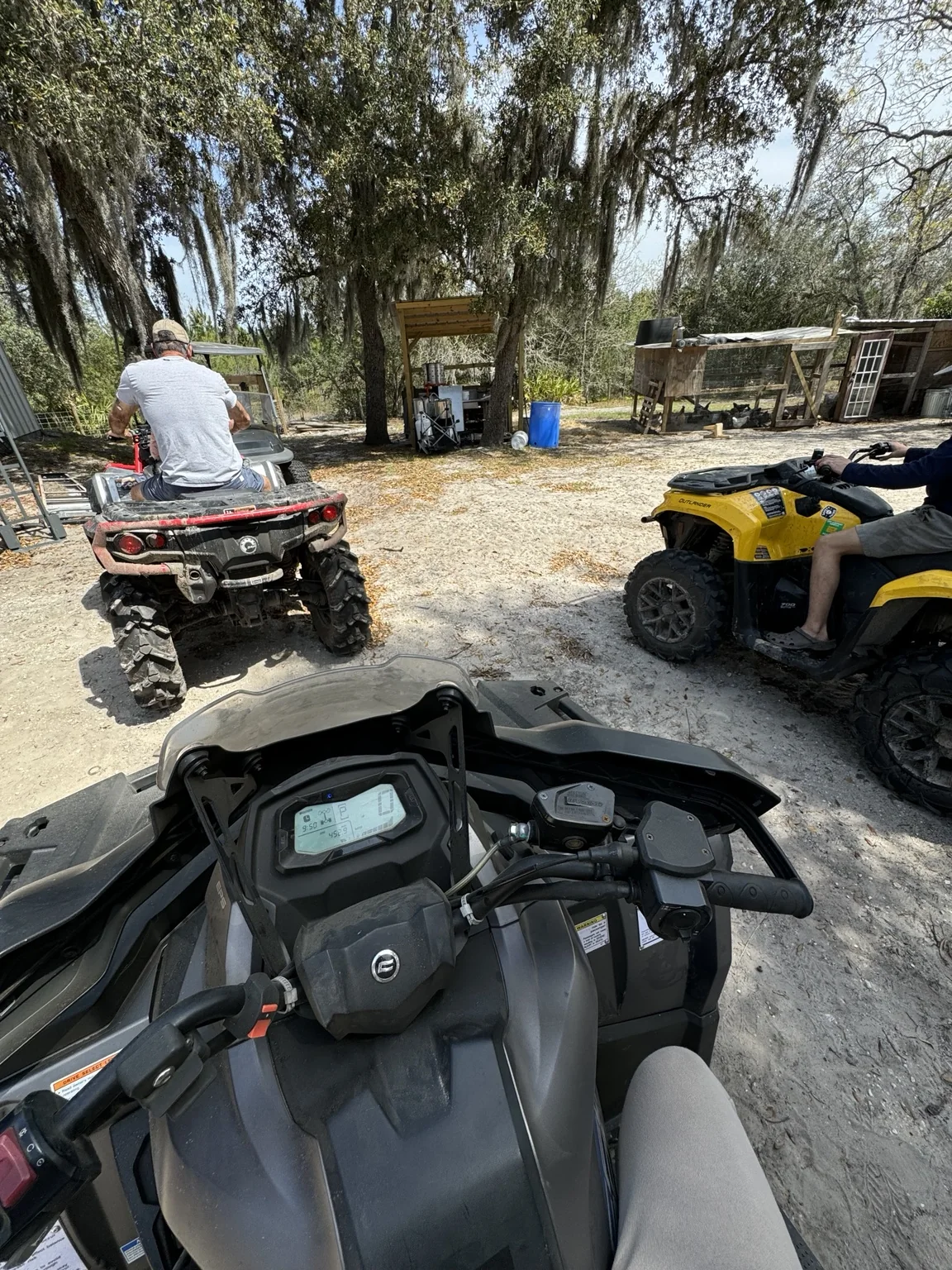
Unlike the previous film, production itself was remarkably smooth. Joselien built a complete Notion workspace with the production mapped out and deadlines established before they became problems. Because the schedule and responsibilities were already mapped, the crew could focus on Toby instead of recovering from preventable mistakes.
Structure behind the camera created freedom in front of it.
03Post-Production
There was more story than the film could hold.
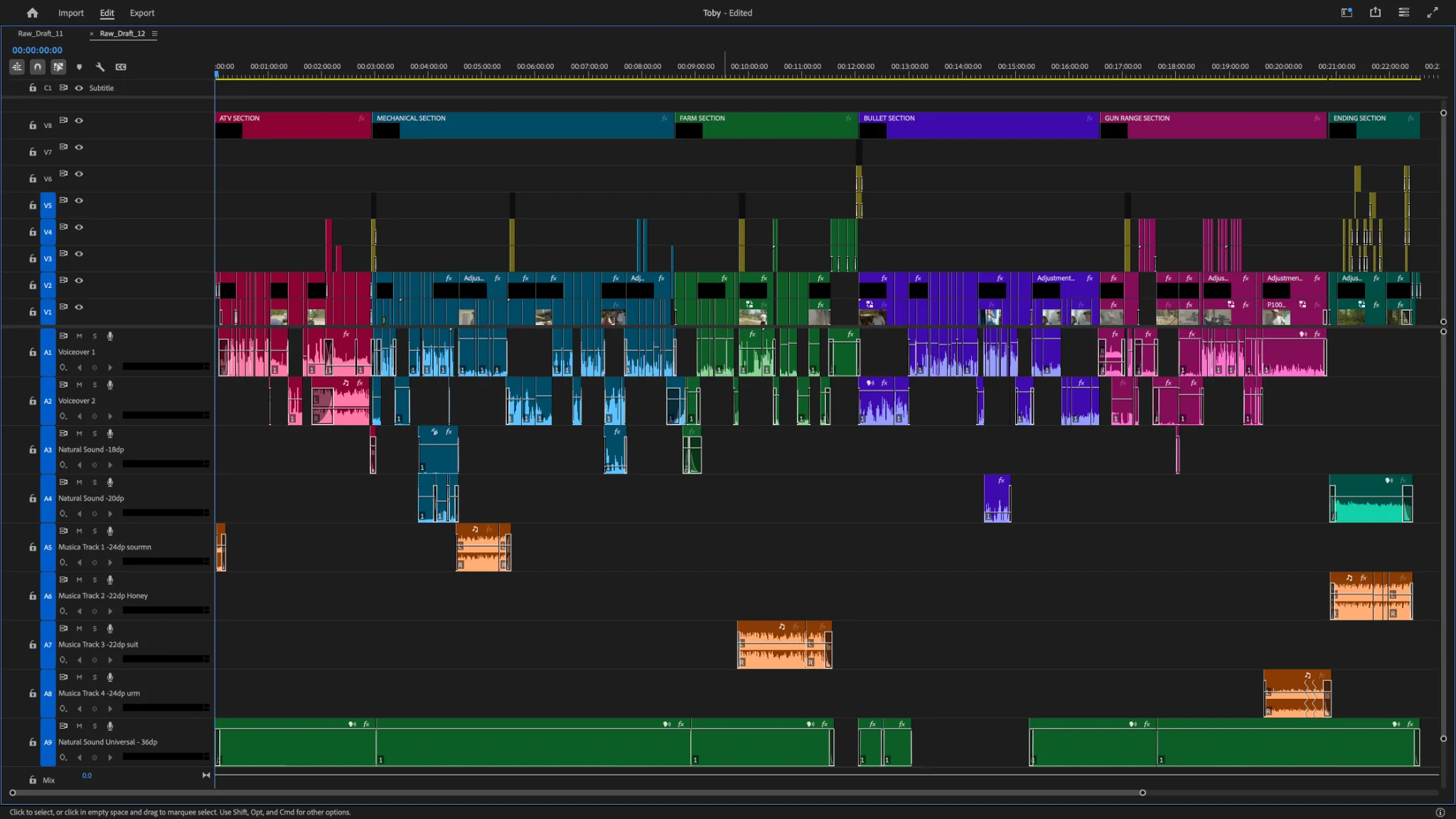
Across five production days, roughly six terabytes of footage were captured. The challenge had reversed itself. Instead of struggling to find a story, there was enough material for a film that could easily have approached forty minutes.
The edit became an exercise in restraint: deciding which parts of Toby’s world were essential and which could be left outside the frame. Because the production had been planned properly, the structure came together early enough that roughly three weeks could be spent polishing rather than rescuing the film.
Let the music arrive quietly.
This Guy Called Toby was also the first documentary in this progression to work with an original composer. Small musical passages were designed to enter and disappear throughout the film rather than continuously instruct the audience how to feel.
04Release & Screening
MOCA Jacksonville · May 7, 2025
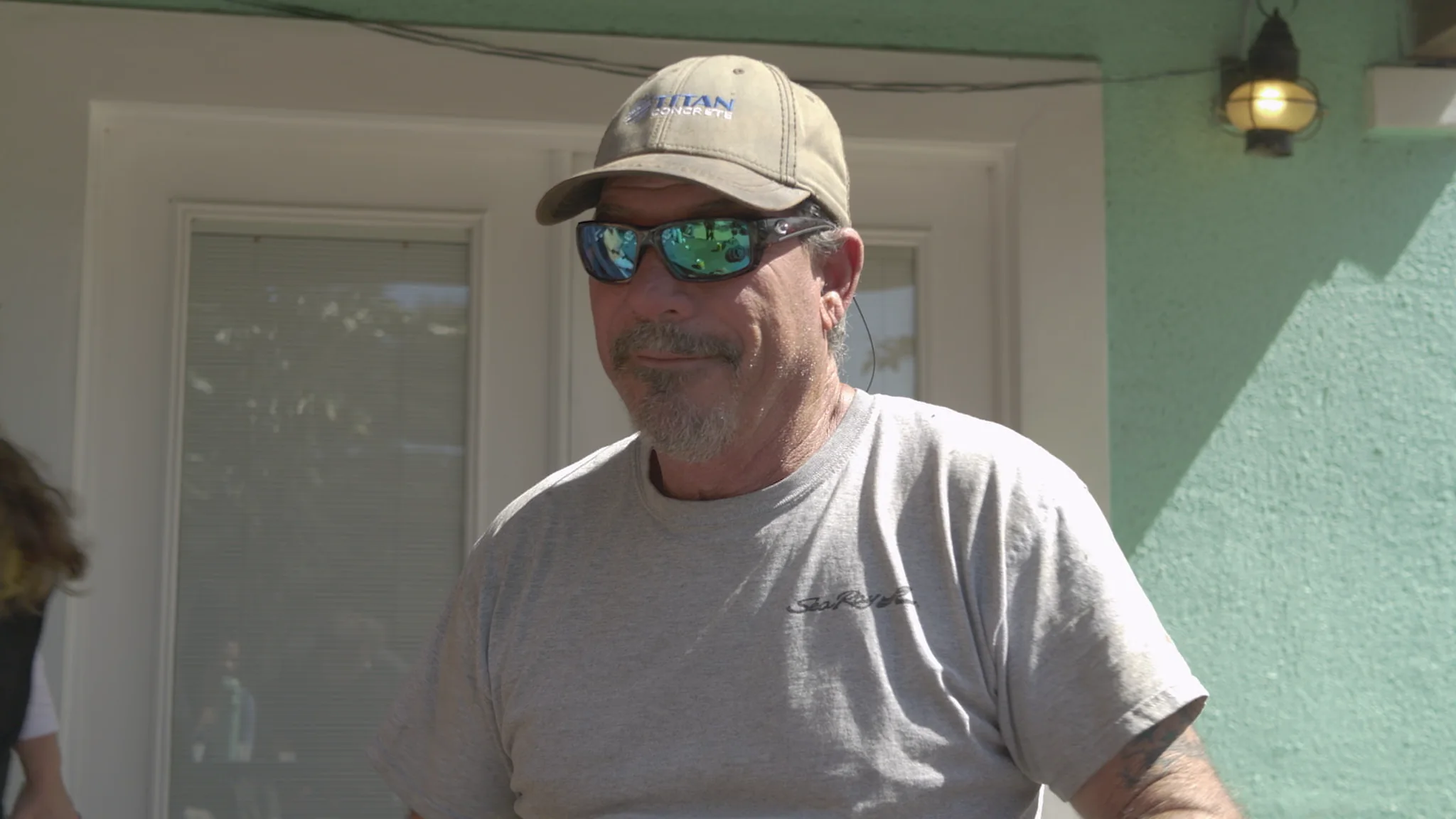
Toby arrived at the premiere with thirty-four members of his family. According to his grandson, seeing himself on a theater screen brought him to tears.
Toby had worried about how the documentary might portray him — whether he would be reduced to a caricature, a political label, or something easier to judge than understand. After seeing the film, that fear was gone.
Many in the audience held political views very different from Toby’s own. Yet the film did not ask either side to agree with the other. They connected with him as a person.
They did not have to agree with Toby to understand him.
The film worked. The image still felt unfinished.
The screening gave Alex every reason to celebrate. The production was organized, the audience connected with Toby, and his family embraced the film. Alex was still dissatisfied.
The story worked. The sound had improved. But the final image did not yet feel as immersive as he believed it could. That dissatisfaction became the next year of work: nearly 365 days spent learning color grading until production began on A Violent Soap Opera.
What remained
The story was planned. The edit had room to breathe.
What began as dissatisfaction with one finished documentary became another discipline that would later shape Studio Portrait.